Technical SEO Checklist 2026: A Complete Guide to Improve Website Rankings & Performance
Why Technical SEO Matters in 2026
Search engines are becoming smarter every year. While high-quality content is important, a website’s technical foundation plays a major role in improving rankings and visibility.
Technical SEO focuses on optimizing the backend structure of a website, including website speed, crawling, indexing, security, and user experience. A technically optimized website helps search engines understand content better and provides users with a smoother browsing experience.
In 2026, factors like Core Web Vitals, mobile optimization, structured data, and website performance will continue to influence search rankings.
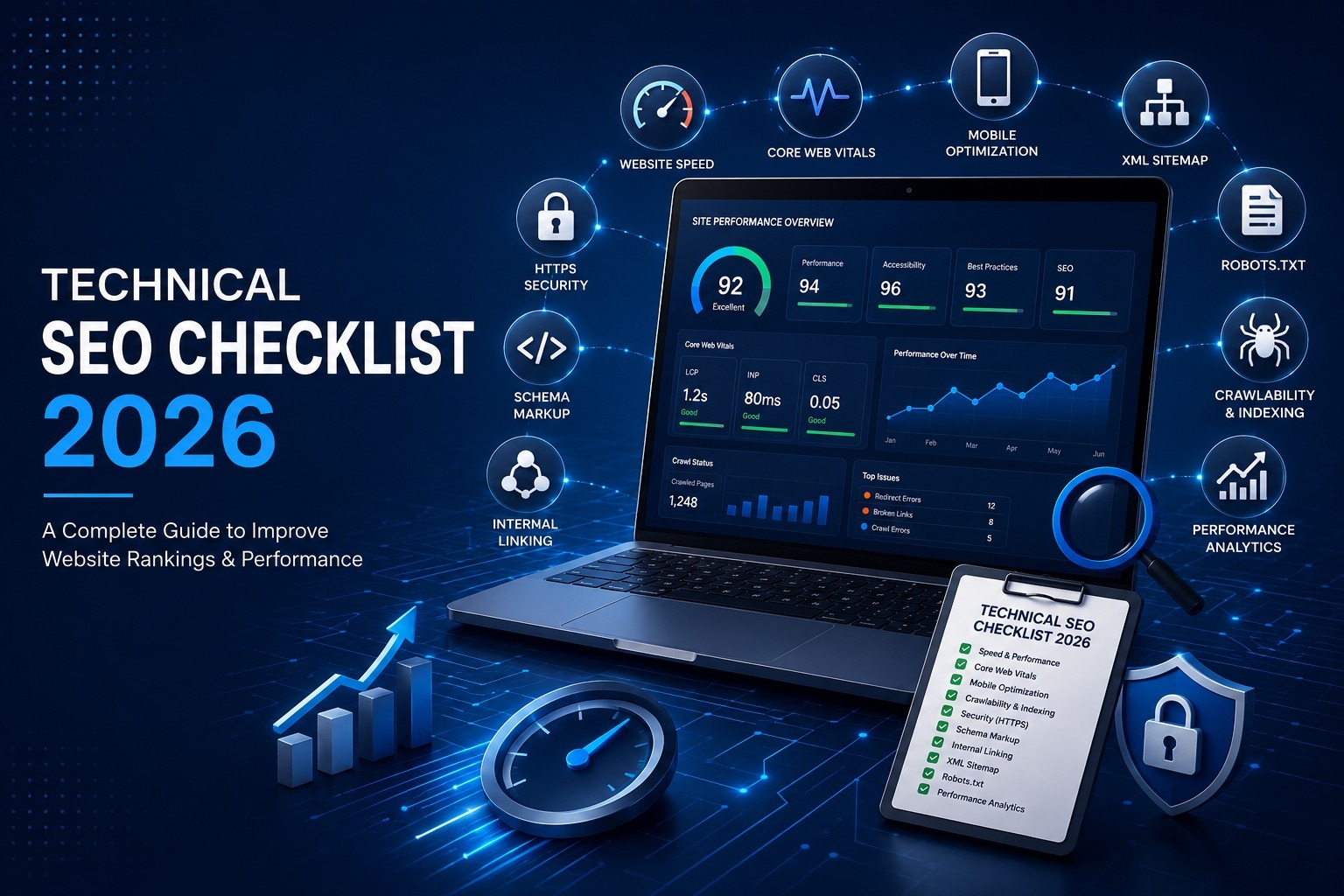
A complete Technical SEO Checklist 2026 helps businesses identify technical issues and improve overall website performance.
What is Technical SEO?
Technical SEO is the process of optimizing a website’s technical elements to help search engines crawl, understand, and index webpages effectively.
Unlike content SEO, which focuses on keywords and content quality, technical SEO improves the website infrastructure.
Important areas of Technical SEO include:
- Website speed optimization
- Mobile responsiveness
- Crawlability and indexing
- XML Sitemap
- Robots.txt
- HTTPS security
- Schema Markup
- Core Web Vitals
A strong technical SEO foundation helps websites perform better in search results.
Technical SEO Checklist 2026
1. Optimize Website Speed & Performance
Website speed is one of the most important technical SEO factors. Slow websites create poor user experiences and can increase bounce rates.
To improve website speed:
- Compress images before uploading
- Use WebP image formats
- Reduce unnecessary plugins
- Minify CSS and JavaScript files
- Improve server response time
- Enable browser caching
A fast website improves user experience, SEO performance, and conversions.
2. Improve Core Web Vitals
Core Web Vitals measure website performance and user experience. Google uses these signals to understand how users interact with a website.
Largest Contentful Paint (LCP)
LCP measures how quickly the main content loads.
To improve LCP:
- Optimize images
- Improve hosting performance
- Reduce heavy scripts
Interaction to Next Paint (INP)
INP measures how quickly a website responds to user actions.
To improve INP:
- Reduce JavaScript usage
- Optimize interactive elements
Cumulative Layout Shift (CLS)
CLS measures unexpected layout changes on a webpage.
To improve CLS:
- Set proper image dimensions
- Avoid unstable page elements
Improving Core Web Vitals creates a smoother user experience and supports better rankings.
Ensure Mobile-Friendly Website Optimization
With mobile-first indexing, Google primarily evaluates the mobile version of websites for rankings.
A mobile-friendly website should:
- Have responsive design
- Load quickly on mobile devices
- Use readable fonts
- Provide easy navigation
- Avoid intrusive pop-ups
Mobile optimization improves user engagement and search visibility.
Improve Website Crawlability & Indexing
Crawlability helps search engines discover and access website pages.
To improve crawlability:
- Create a clear website structure
- Use internal linking
- Fix broken links
- Maintain clean URLs
- Monitor crawl errors
For better indexing:
- Check Google Search Console
- Remove unnecessary tags
- Submit important pages
- Keep website content updated
Proper crawling and indexing ensure important pages appear in search results.
Create & Optimize XML Sitemap
An XML Sitemap helps search engines understand website structure and discover important pages.
XML Sitemap best practices:
- Include important pages only
- Remove outdated URLs
- Update regularly
- Submit through Google Search Console
A clean sitemap improves website discoverability.
Optimize Robots.txt File
Robots.txt controls how search engine bots crawl your website.
Common Robots.txt mistakes:
- Blocking important pages
- Preventing access to website resources
- Incorrect crawling instructions
Best practices:
- Allow important pages to be crawled
- Block unnecessary sections
- Check the file regularly
Proper robots.txt optimization improves crawl efficiency.
Implement Schema Markup for Better Visibility
Schema Markup helps search engines understand website content better.
Common schema types include:
- Article Schema
- FAQ Schema
- Product Schema
- Local Business Schema
- Review Schema
Benefits of Schema Markup:
- Improves search visibility
- Helps generate rich results
- Provides better information to users
Structured data is becoming increasingly important for modern SEO.
Optimize Internal Linking Structure
Internal linking helps search engines understand the relationship between different pages on your website.
Best practices for Internal Linking:
- Link important pages together
- Use descriptive anchor text
- Connect related blogs
- Avoid excessive linking
A strong internal linking strategy improves navigation, user experience, and SEO performance.
Fix Broken Links & Redirect Issues
Broken links negatively impact user experience and SEO.
Common technical SEO issues:
- 404 errors
- Broken internal links
- Incorrect redirects
- Redirect chains
How to fix these issues:
- Regularly audit website links
- Use 301 redirects
- Remove outdated links
- Monitor errors through Search Console
Healthy links help users and search engines navigate your website easily.
Technical SEO Mistakes to Avoid in 2026
Many websites lose rankings because of technical SEO mistakes.
1. Ignoring Website Speed
Slow websites can reduce user engagement and rankings.
2. Not Optimizing for Mobile
Poor mobile experience can lead to traffic loss.
3. Duplicate Content Issues
Duplicate pages can confuse search engines.
4. Missing Schema Markup
Without structured data, websites may miss rich result opportunities.
5. Ignoring SEO Audits
Regular audits help identify and fix technical issues.
Future of Technical SEO in 2026
Technical SEO will continue evolving with AI search and improved user experience standards.
Future trends include:
- AI-based website analysis
- Better page experience signals
- Increased use of structured data
- Voice and AI search optimization
Businesses that focus on technical SEO will have a stronger advantage in the changing digital landscape.
Conclusion
Technical SEO is the foundation of a successful SEO strategy. A website with strong technical performance can improve rankings, increase organic traffic, and deliver a better user experience.
By focusing on website speed, Core Web Vitals, mobile optimization, indexing, security, and structured data, businesses can build a strong SEO foundation for 2026 and beyond.
FAQ
1. What is a Technical SEO Checklist?
A Technical SEO Checklist includes important optimization steps like website speed, crawling, indexing, security, and mobile optimization.
2. Why is Technical SEO important?
Technical SEO helps search engines understand websites better and improves user experience and rankings.
3. How often should a Technical SEO audit be performed?
A technical SEO audit should be performed every few months or after major website changes.
4. Does Technical SEO improve rankings?
Yes, technical SEO improvements help websites become faster, easier to crawl, and more user-friendly.
5. What are important Technical SEO factors in 2026?
Important factors include:
- Core Web Vitals
- Website speed
- Mobile optimization
- HTTPS security
- Schema Markup
- Crawlability
- Indexing