Moment Marketing: Turning Real-Time Moments into Brand Impact
What is Moment Marketing?
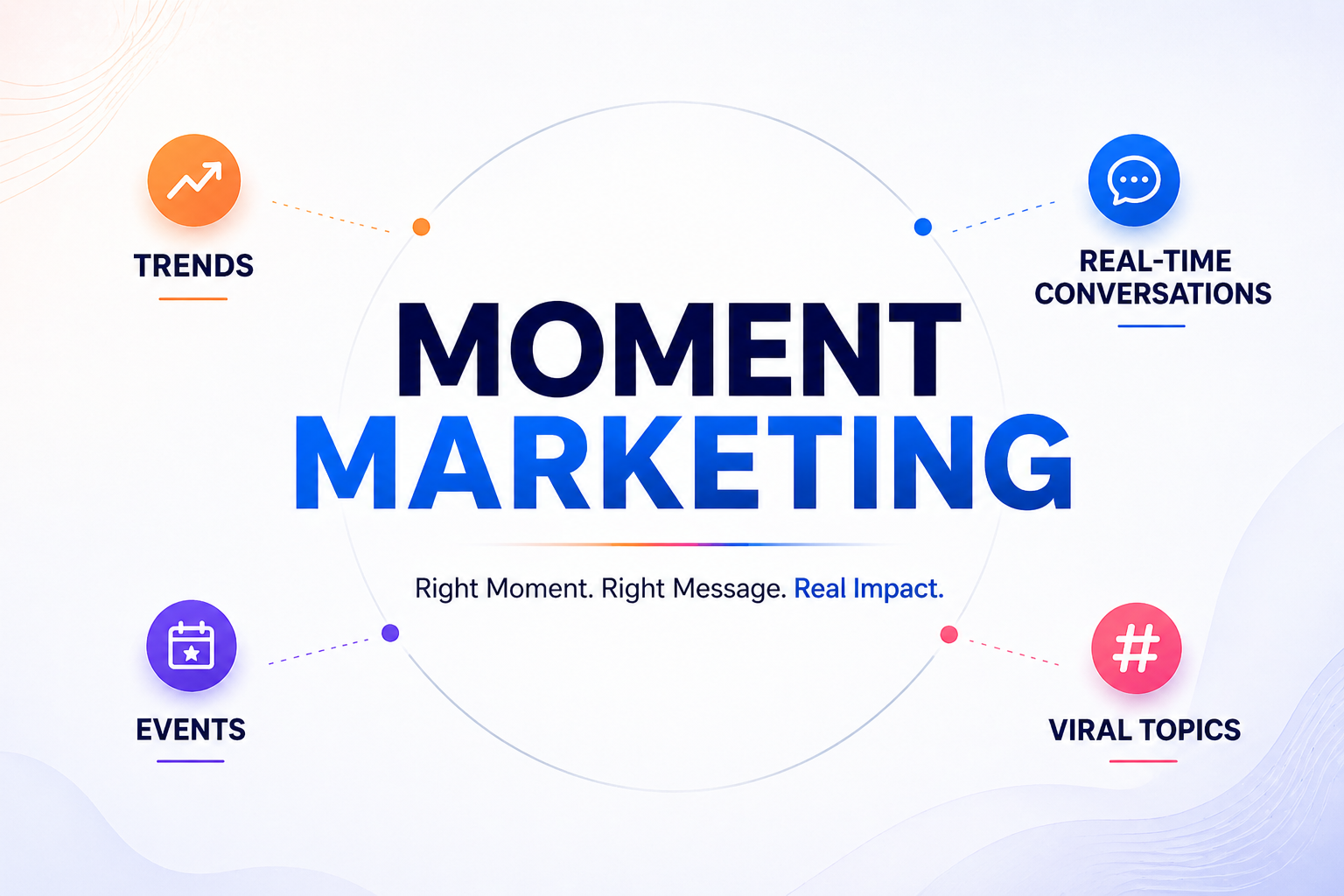
Moment marketing is a strategic approach in digital marketing that focuses on leveraging real-time events, cultural trends, social conversations, and current happenings to create timely, relevant, and engaging brand communication. Unlike traditional marketing, which relies heavily on pre-planned campaigns, moment marketing emphasizes agility and responsiveness, allowing brands to participate in conversations that audiences are already actively engaging with.
It involves identifying the right moment—whether it is a trending hashtag, a viral meme, a major event, or a breaking news story—and aligning it with the brand’s messaging in a way that feels natural and authentic. The effectiveness of moment marketing lies in its ability to capture audience attention instantly, as the content resonates with what is top-of-mind for consumers.
When executed correctly, moment marketing not only increases visibility but also strengthens brand recall and emotional connection. It requires a balance of speed, creativity, cultural awareness, and strategic thinking to ensure that the communication remains relevant, appropriate, and aligned with the brand’s identity.
Moment marketing can be broadly categorized into a few key types based on the nature of the moment being leveraged. Cultural moments revolve around festivals, national events, and widely celebrated occasions like Diwali or major sports tournaments, allowing brands to connect with shared emotions, traditions, and collective sentiment at scale. Trending topics focus on viral content such as memes, hashtags, or social media conversations that gain rapid traction, where brands can creatively participate to boost visibility, relevance, and shareability. Industry moments are specific to a brand’s sector, including product launches, updates, reports, or major announcements, helping position the brand as timely, informed, and authoritative within its niche. Lastly, unplanned events refer to sudden or unexpected occurrences like breaking news or viral incidents, where brands must respond quickly and thoughtfully to stay relevant while maintaining sensitivity and credibility. Each type requires a careful balance of timing, creativity, cultural awareness, and strong brand alignment to deliver meaningful impact.
Why Moment Marketing Matters
1. Real-Time Relevance
In today’s fast-paced digital ecosystem, consumer attention spans are short and constantly shifting. Moment marketing enables brands to stay relevant by aligning their communication with current events and ongoing conversations. By tapping into what audiences are already discussing, brands can seamlessly integrate themselves into the content consumption cycle, increasing the likelihood of being noticed and remembered.
2. Higher Engagement
Content that is tied to trending moments tends to perform significantly better in terms of engagement. Since the audience is already interested in the topic, they are more likely to interact with the content through likes, shares, comments, and discussions. This organic amplification helps brands extend their reach without relying solely on paid promotions.
3. Brand Humanization
Moment marketing allows brands to showcase their personality and relatability. By participating in cultural or social moments, brands move beyond being purely transactional and become part of everyday conversations. This helps in building a more human and approachable image, which is essential for long-term audience trust and loyalty.
Types of Moment Marketing
1. Cultural Moments
Cultural moments include festivals, public holidays, and large-scale events that hold emotional or social significance for a wide audience. These moments provide brands with an opportunity to connect with consumers on a deeper level by aligning with shared values, traditions, and sentiments.
2. Trending Topics
Trending topics refer to viral content, memes, hashtags, or discussions that gain rapid popularity on social media platforms. Brands that can quickly and creatively adapt these trends into their messaging can achieve high visibility and engagement.
3. Industry Moments
Industry moments are specific to a brand’s sector and include product launches, announcements, innovations, or major updates. Leveraging these moments helps brands establish authority and stay relevant within their niche.
4. Unplanned Events
Unplanned events include breaking news, unexpected incidents, or spontaneous viral moments. These require quick decision-making and careful judgment, as brands must ensure their response is both timely and sensitive to the context.
How Mobligent Uses Moment Marketing
1. Speed with Strategy
At Mobligent, moment marketing is approached with a balance of speed and strategic intent. While quick execution is essential, every piece of content is evaluated to ensure it aligns with the brand’s voice, objectives, and audience expectations.
2. Data-Driven Insights
Mobligent relies on data analytics, trend monitoring tools, and audience behavior insights to identify relevant moments. This ensures that the brand engages with trends that have the highest potential for impact.
3. Platform-Specific Content
Different platforms require different content approaches. Mobligent tailors its moment marketing strategies based on platform behavior, ensuring that the messaging is optimized for maximum effectiveness across channels like Instagram, LinkedIn, and Twitter.
4. Consistent Brand Voice
Even in real-time communication, maintaining a consistent brand voice is a priority. This helps in building strong brand recall and ensures that all content, whether planned or reactive, contributes to a unified brand identity.
Best Practices for Moment Marketing
1. Relevance Over Trend-Chasing
Not every trend is suitable for every brand. It is important to evaluate whether a particular moment aligns with the brand’s identity, values, and target audience before engaging.
2. Simple and Clear Messaging
Moment marketing content should be easy to understand and quick to consume. Clear and concise messaging ensures that the audience immediately grasps the intent without confusion.
3. Sensitivity and Responsibility
Brands must exercise caution when dealing with sensitive topics or serious events. Misjudged communication can lead to negative perception and reputational damage.
4. Agile Execution
Having a flexible content strategy and a responsive team enables brands to act quickly without compromising on quality. Preparedness plays a key role in successful execution.
Conclusion
Moment marketing has become an essential component of modern digital strategy. It enables brands to stay relevant, increase engagement, and build meaningful connections with their audience. By combining speed, creativity, and strategic thinking, Mobligent ensures that every moment is transformed into an opportunity for impactful brand communication.
Moment marketing plays a critical role in helping brands remain relevant and competitive in today’s fast-paced digital landscape. By leveraging real-time events, trends, and conversations, brands can connect with audiences in a way that feels timely, authentic, and engaging. Unlike traditional marketing, it requires a balance of speed, creativity, and strategic thinking to ensure that the message aligns with both the moment and the brand’s identity. When executed effectively, moment marketing not only increases visibility and engagement but also strengthens brand recall and emotional connection with the audience. It allows brands to become part of ongoing conversations rather than just observers, making their presence more impactful. However, success in moment marketing depends on choosing the right moments, maintaining sensitivity, and delivering clear, relevant messaging that adds value rather than noise.
Frequently Asked Questions (FAQs)
Q1.What is moment marketing in simple terms?
Moment marketing is the practice of creating content based on real-time events, trends, or conversations to make a brand more relevant and engaging. It focuses on being timely and connecting with what audiences are currently interested in.
Q2. Why is moment marketing important for brands?
Moment marketing helps brands stay visible in a fast-moving digital landscape. It increases engagement, improves brand recall, and allows brands to connect with audiences in a more natural and relatable way.
Q3. What are some examples of moment marketing?
Examples include brands posting creative content during festivals, reacting to viral memes, engaging during major sports events, or responding quickly to trending social media topics.
Q4. How is moment marketing different from traditional marketing?
Traditional marketing is usually planned in advance and follows a fixed schedule, whereas moment marketing is spontaneous and reacts to real-time events, requiring quick thinking and execution.
Q5. What platforms are best for moment marketing?
Social media platforms like Instagram, Twitter (X), and LinkedIn are most effective, as they allow brands to engage with trends and audiences instantly.
Q6. What are the risks of moment marketing?
If not handled carefully, moment marketing can backfire. Using sensitive topics, misjudging a trend, or forcing brand relevance can lead to negative audience reactions.
Q7. How can Mobligent help with moment marketing?
Mobligent combines real-time trend monitoring, creative strategy, and platform-specific execution to help brands leverage the right moments effectively while maintaining brand consistency.