Google Search Ads vs Display Ads: Which One is Right for Your Business?
Digital Advertising has become one of the most effective ways for businesses to reach potential customers and drive measurable growth. Among the various advertising options available, Google Ads remains a preferred choice because it allows brands to connect with audiences at different stages of the buying journey.
However, many businesses struggle with one important question: should they invest in Google Search Ads or Google Display Ads? While both campaign types are part of the Google Ads ecosystem, they serve different purposes and deliver different outcomes.
Understanding the strengths of each advertising format can help businesses allocate their budgets more effectively and maximize return on investment.
Why Google Ads Is Essential for Modern Businesses
Google processes billions of searches every day, making it one of the largest advertising platforms in the world. Businesses can use Google Ads to increase visibility, generate leads, drive sales, and build brand awareness.
Some key advantages include:
- Precise audience targeting
- Measurable campaign performance
- Flexible advertising budgets
- Faster business growth opportunities
What Are Google Search Ads?
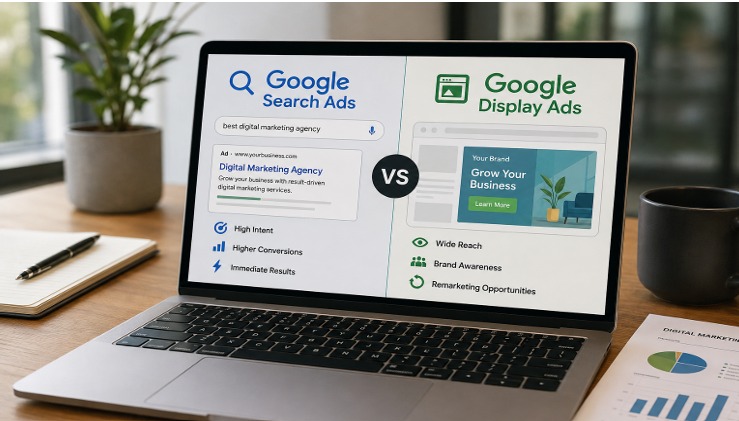
Google Search Ads appear at the top of search engine results pages when users search for specific keywords related to a business, product, or service.
These ads target users who already have intent and are actively looking for solutions.
Key Benefits of Search Ads
- High-quality leads
- Better conversion rates
- Immediate visibility on Google
- Strong purchase intent
What Are Google Display Ads?
Google Display Ads are visual advertisements that appear across websites, mobile applications, and YouTube through Google’s Display Network.
Unlike Search Ads, Display Ads focus on reaching audiences while they browse content online.
Key Benefits of Display Ads
- Increased brand awareness
- Wider audience reach
- Cost-effective impressions
- Effective remarketing opportunities
When Should Businesses Choose Search Ads?
Search Ads work best when businesses want immediate inquiries, sales, or lead generation.
Ideal use cases include:
- Service-based businesses
- Local businesses
- B2B lead generation
- High-intent marketing campaigns
| Feature | Search Ads | Display Ads |
|---|---|---|
| Audience Intent | High | Low to Medium |
| Goal | Leads & Sales | Brand Awareness |
| Ad Format | Text Ads | Image & Banner Ads |
| Typical Conversion Rate | Higher | Lower |
| Reach | Limited by Search Volume | Very Large |
When Should Businesses Choose Display Ads?
Display Ads are effective when the goal is visibility and audience engagement.
Ideal use cases include:
- New product launches
- Brand awareness campaigns
- Retargeting website visitors
- Expanding market reach
Why Combining Search and Display Ads Often Delivers Better Results
1. Search Ads Capture Demand
Search Ads target users who are actively looking for products, services, or solutions related to your business. Since these users already have a clear intent, they are often closer to making a purchase or taking action. This makes Search Ads highly effective for driving qualified traffic, generating leads, and increasing conversions. Businesses can also target specific keywords to reach customers at the exact moment they are searching.
2. Display Ads Create Demand
Display Ads help businesses reach potential customers who may not yet be actively searching for a solution. Through visually engaging banners, images, and videos displayed across websites, apps, and online platforms, brands can increase awareness and stay top-of-mind. Display campaigns are particularly useful for introducing new products, building brand recognition, and attracting audiences earlier in the buying process.
3. Full-Funnel Marketing Approach
Combining Search and Display Ads creates a complete marketing funnel that supports customers at every stage of their journey. Display Ads build awareness and familiarity with the brand, while Search Ads capture users when they are ready to research or purchase. This integrated approach often leads to higher brand recall, improved click-through rates, stronger conversion performance, and better overall return on advertising spend (ROAS). By using both formats strategically, businesses can maximize their reach and influence customers from initial discovery to final conversion.
How Mobligent Media Helps Businesses Maximize Google Ads Performance
A successful Google Ads strategy requires more than simply launching campaigns.
Mobligent Media helps businesses with:
1. Keyword Research
Effective PPC campaigns start with thorough keyword research. Identifying relevant, high-intent keywords helps businesses reach users who are actively searching for their products or services. Proper keyword selection also improves ad relevance, click-through rates, and overall campaign performance.
2. Campaign Setup
A well-structured campaign setup ensures ads are organized correctly based on goals, products, services, or target audiences. Proper campaign settings, bidding strategies, geographic targeting, and budget allocation help maximize efficiency and improve return on investment.
3. Ad Copy Creation
Compelling ad copy plays a crucial role in attracting clicks and driving conversions. Effective ads include clear messaging, relevant keywords, strong value propositions, and persuasive calls-to-action that encourage users to take the desired action.
4. Audience Targeting
Audience targeting helps businesses reach the right people at the right time. Advertisers can target users based on demographics, interests, online behavior, location, device type, and previous interactions, ensuring advertising budgets are spent more effectively.
5. Conversion Tracking
Conversion tracking allows businesses to measure important actions such as purchases, form submissions, phone calls, or sign-ups. By monitoring these metrics, advertisers can understand campaign effectiveness and make data-driven decisions to improve results.
6. Performance Optimization
Continuous performance optimization is essential for long-term PPC success. This includes analyzing campaign data, refining keywords, adjusting bids, testing ad variations, improving landing pages, and eliminating underperforming elements to achieve better results and higher returns.
Conclusion
Both Google Search Ads and Display Ads offer unique advantages depending on business objectives. Search Ads excel at generating leads from high-intent users, while Display Ads help brands increase visibility and remain top-of-mind. Businesses that understand how and when to use each format can achieve stronger marketing results and better returns on their advertising investment.
FAQs
1. Which is better for lead generation, Search Ads or Display Ads?
Search Ads are generally better for lead generation because they target users who are actively searching for products or services.
2. Are Display Ads cheaper than Search Ads?
Yes, Display Ads often have lower costs per click and impression, making them a cost-effective option for increasing brand visibility.
3. Can small businesses run both campaign types together?
Yes, small businesses can use both Search and Display Ads together to generate leads while also building brand awareness.
4. How do I choose between Search Ads and Display Ads?
Choose Search Ads if your goal is immediate leads or sales. Choose Display Ads if your focus is brand awareness, audience reach, or remarketing.